Last updated: April 7, 2026
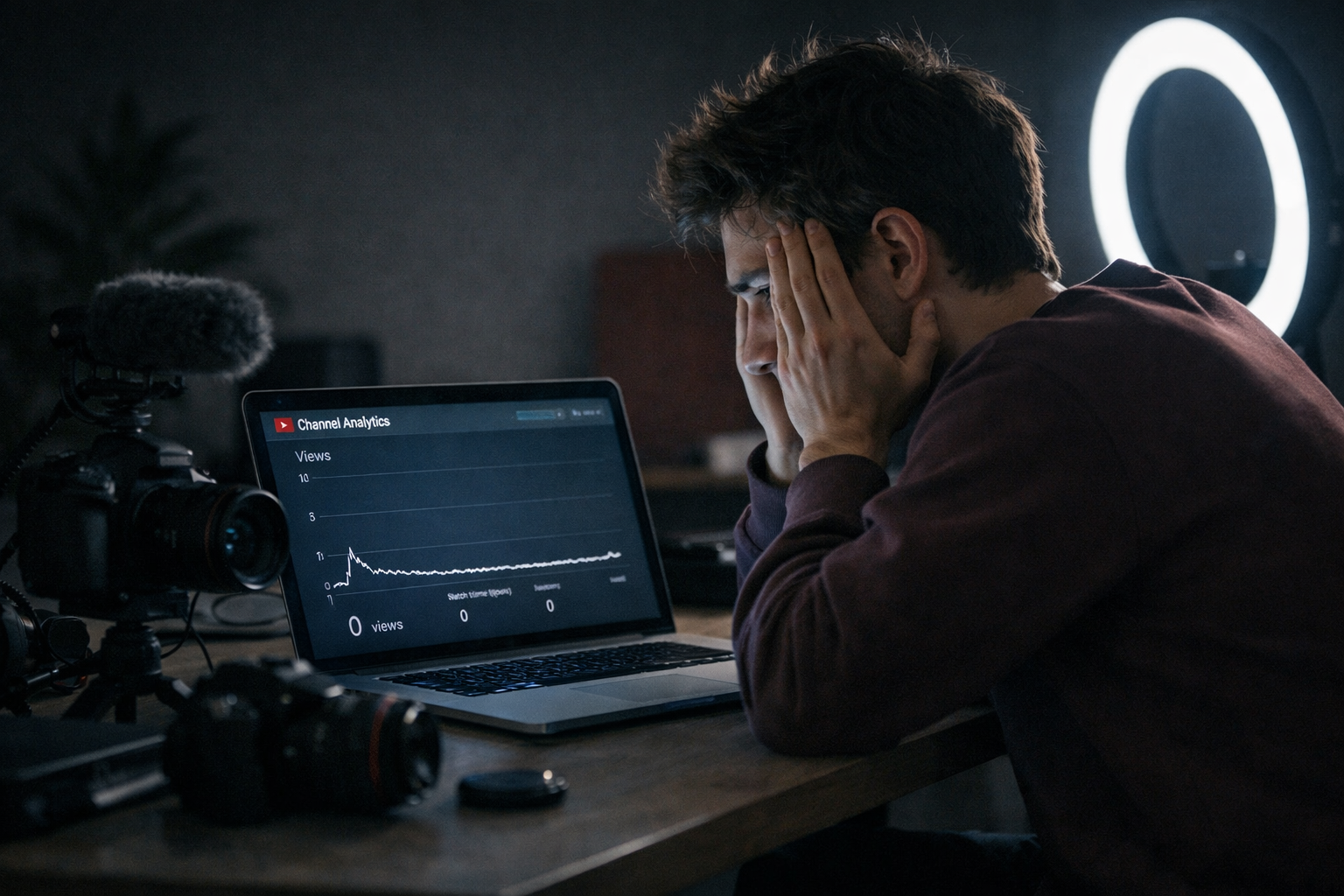
Quick Answer: Most YouTube channels never get views because they build the wrong audience early on, send confusing signals to the algorithm, and ignore the basics of discoverability — not because their content is bad. Fix your audience targeting, your thumbnails, and your consistency, and the algorithm will start working for you instead of against you.
Key Takeaways
- The algorithm judges your video based on who reacts to it, not just the video itself
- Attracting the wrong subscribers early creates an invisible growth ceiling that’s hard to break
- Inconsistent niche focus confuses both viewers and YouTube’s recommendation system
- Thumbnails and titles are your most important growth levers — most creators underinvest in both
- Long-form channels face more competition for homepage slots than they did two years ago
- Small channels are currently getting more homepage visibility than at any previous point
- AI-generated content has flooded information-based niches, making originality more valuable than ever
- Fixing your channel’s foundation — audience fit, SEO, and click-through rate — solves most growth problems

The Real Reason Why Most YouTube Channels Never Get Views
Most channels don’t fail because of bad cameras or poor editing. They fail because YouTube can’t figure out who to show their videos to.
Here’s how it actually works: when you upload a video, YouTube shows it to a small test group — usually your existing subscribers. If those subscribers watch, click, and engage, YouTube pushes the video to a broader audience. If they don’t, the video dies quietly.
That’s the trap. If your subscribers don’t match your content, your content never spreads. And most creators build a mismatched audience without realizing it.
The audience ceiling problem: Every video you publish is a vote for who finds your channel and subscribes. Post a viral meme video early on, and you’ll attract subscribers who want memes — not your actual content. Those subscribers then drag down every future video’s performance. It’s not the algorithm punishing you. It’s the algorithm reading a confused signal and playing it safe.
Common early mistakes that create this ceiling:
- Chasing trending topics outside your niche to get quick views
- Posting wildly different content types (vlogs, tutorials, reaction videos) without a clear theme
- Buying subscribers or using giveaways that attract unengaged followers
- Optimizing for views instead of the right viewers
If your channel feels stuck, run a quick YouTube channel audit to see whether your subscriber base actually matches your content direction.
How the Algorithm Decides Who Sees Your Videos
YouTube’s algorithm doesn’t promote videos — it promotes viewer experiences. That’s an important distinction.
The system is constantly asking: “If I show this video to this person, will they watch it, enjoy it, and come back for more?” Your job is to give it enough evidence to say yes.
What signals matter most:
| Signal | What It Measures | Why It Matters |
|---|---|---|
| Click-through rate (CTR) | % of people who click your thumbnail | Low CTR = YouTube stops showing the video |
| Average view duration (AVD) | How long people watch | High AVD = strong content signal |
| Subscriber engagement | Do your subs watch your new videos? | Poor engagement kills new video reach |
| Binge-watching behavior | Do viewers watch multiple videos? | Builds algorithm trust over time |
| Traffic source diversity | Browse, search, suggested | Balanced sources = healthy channel |
One thing that catches creators off guard: homepage slots are more competitive now than they were a few years ago. YouTube reduced the number of long-form videos promoted on homepages to make room for Shorts. That means your video is competing harder for limited real estate.
The good news? YouTube has also started giving small channels more homepage visibility than before. If your signals are clean, you have a real shot — even with a small subscriber count.
Why Most YouTube Channels Never Get Views: The Discoverability Gap
Even great videos go unwatched if nobody can find them. This is the discoverability gap, and it’s one of the most common reasons channels stagnate.
YouTube is also a search engine — the second largest in the world. If your titles, descriptions, and tags don’t reflect what people actually type into the search bar, your videos won’t appear when it counts.
The three discoverability mistakes most creators make:
- Vague titles — “My Weekend Vlog #14” tells YouTube nothing. “Solo Weekend Camping Trip in the Smoky Mountains” tells it everything.
- Weak thumbnails — Your thumbnail is your ad. If it doesn’t earn the click, nothing else matters. Check out this guide on optimizing YouTube titles and thumbnails for a practical breakdown.
- No keyword research — Before you film, spend 10 minutes searching your topic on YouTube. Look at what titles the top videos use. That’s your starting point.
Social proof also plays a role here. Entertainment content typically needs around 10,000 views before social proof starts driving organic clicks. Educational content often needs 100,000+ views to gain real momentum. That’s not discouraging — it just means early-stage creators need to rely on search traffic and consistency rather than viral momentum.
If your videos are getting no impressions at all, the problem is usually upstream from views. Read through why your YouTube videos get no impressions to diagnose the issue.

The Content Saturation Problem (Especially for Info-Based Channels)
Information-based YouTube content is getting harder to stand out in. AI tools have made it cheap and fast to produce explainer videos, listicles, and how-to content — which means more generic videos flooding every niche.
If your channel covers topics like “how to invest,” “beginner fitness tips,” or “learn Python,” you’re competing with thousands of videos that cover the same ground in the same way.
How to cut through:
- Add a perspective only you can offer (personal experience, original data, contrarian takes)
- Go narrower and deeper — “How I paid off $40k in 18 months on a teacher’s salary” beats “How to pay off debt”
- Use your face, voice, and story — AI can’t replicate that
- Consider faceless YouTube channel strategies if you want to compete in saturated niches without relying on personal branding
The channels winning in saturated niches right now aren’t the ones with the best production. They’re the ones with the clearest point of view.
Common Mistakes That Kill Channel Growth Before It Starts
Most of these are fixable. Knowing them is half the battle.
- Posting inconsistently — The algorithm rewards predictable upload schedules. Sporadic posting breaks momentum.
- Ignoring the first 30 seconds — If viewers drop off early, YouTube reads it as a bad video. Hook them fast.
- No clear call to action — Telling viewers to subscribe, watch another video, or leave a comment actually works. Don’t skip it.
- Skipping the channel setup basics — A missing channel description, no channel art, and no playlists all hurt discoverability. Use this YouTube channel setup checklist if you’re starting fresh.
- Making every video for everyone — Niche down. A channel about “travel” is invisible. A channel about “budget travel in Southeast Asia for solo women over 40” has a real audience.
For a deeper look at what’s quietly hurting your numbers, the guide on YouTube mistakes that kill channel growth covers the most common culprits in detail.
How to Fix a Channel That Isn’t Growing
If your channel is stuck, don’t start over — diagnose first.
A simple 3-step reset:
- Audit your last 20 videos. Which ones performed best? What did they have in common — topic, format, thumbnail style, title structure? Double down on what worked.
- Check your subscriber fit. Look at your analytics. Are your subscribers watching your new uploads? If watch time from subscribers is low, you have an audience mismatch problem.
- Pick one variable to fix. Don’t overhaul everything at once. Start with thumbnails if your CTR is below 4%. Start with retention if viewers drop off in the first minute. One fix at a time gives you clear data.
If you want a structured approach, the guide to fixing a YouTube channel that isn’t growing walks through this process step by step.
Also worth considering: you don’t have to do everything yourself. Tasks like thumbnail design, video editing, and SEO research can be outsourced affordably. Fiverr has a solid pool of YouTube-focused freelancers — from thumbnail designers to video editors who specialize in YouTube content. If you’re spending 10 hours editing a video that could be done in 2 by someone else, that’s time you could spend on strategy and filming. You can also find YouTube SEO specialists on Fiverr who can audit your titles, tags, and descriptions. For more on what to hand off first, see what to outsource first in a YouTube channel.

FAQ: Why Most YouTube Channels Never Get Views
Q: How long does it take for a new YouTube channel to get views? Most new channels see meaningful organic growth between 3 and 12 months in, assuming consistent posting and solid SEO. Channels that post weekly and optimize titles and thumbnails from day one tend to see traction faster.
Q: Does subscriber count affect how many views you get? Yes, but not in the way most people think. It’s not the number of subscribers — it’s how engaged they are. A channel with 500 highly engaged subscribers will often outperform one with 10,000 unengaged ones.
Q: Why do some videos get views immediately while others never take off? Timing, topic demand, thumbnail quality, and audience fit all play a role. Videos on trending or high-search-volume topics with strong thumbnails get pushed faster. Videos on low-demand topics need to earn their views through suggested traffic over time.
Q: Is it harder to grow on YouTube in 2026 than it was before? In some ways, yes — more content, more competition, fewer homepage slots for long-form videos. But YouTube has also increased homepage visibility for small channels, which means the opportunity is real if your signals are strong.
Q: Should I delete old videos that got no views? Generally, no. Old videos with low views don’t hurt your channel’s performance. Deleting them removes any chance they have of picking up search traffic later. Focus on improving new content instead.
Q: Do Shorts help or hurt a long-form channel? Shorts can bring in new subscribers, but those subscribers often don’t watch long-form content. Keep your Shorts strategy separate from your long-form strategy, and track whether Shorts subscribers engage with your main videos.
Q: What’s the fastest way to improve a channel that’s getting no views? Fix your thumbnails and titles first. These are the highest-leverage changes you can make without touching your content. A better thumbnail on an existing video can restart its performance immediately.
Q: How important is posting frequency? Consistency matters more than frequency. One well-optimized video per week beats three rushed videos. Set a schedule you can maintain for six months without burning out.
Q: Can buying views or subscribers help jumpstart a channel? No. Purchased views and subscribers don’t engage with your content, which tanks your engagement rate and signals to YouTube that your content isn’t worth promoting. It makes the audience mismatch problem significantly worse.
Q: What niche should I pick to grow fastest? Pick a niche with real search demand and an audience you genuinely understand. Avoid niches that are purely trend-dependent. The fastest-growing channels in 2026 are specific, consistent, and built around a clear viewer promise.
Conclusion: Your Next Step Starts Today
Understanding why most YouTube channels never get views is the first step to making sure yours doesn’t fall into the same trap. The problem is almost never the camera, the editing software, or even the content quality. It’s audience fit, discoverability, and consistency.
Here’s what to do right now:
- Audit your last 10 videos — check CTR, average view duration, and whether your subscribers are actually watching
- Rewrite the title and redesign the thumbnail on your best-performing video and see if it picks up momentum
- Define your target viewer in one sentence before filming your next video — who are they, what do they want, and why should they watch you?
Small, focused improvements compound fast. You don’t need to overhaul everything. You just need to start fixing the right things.
Meta Title: Why Most YouTube Channels Never Get Views (2026 Guide)
Meta Description: Discover the real reasons most YouTube channels never get views in 2026 — and get actionable fixes for audience fit, SEO, and algorithm growth.
Tags: YouTube growth, why YouTube channels fail, YouTube algorithm, channel growth tips, YouTube SEO, increase YouTube views, YouTube mistakes, content strategy, YouTube for beginners, audience targeting, YouTube thumbnails, channel discoverability
YouTube Channel Health Checker
Answer 6 quick questions to find out why your channel might not be getting views — and what to fix first.