
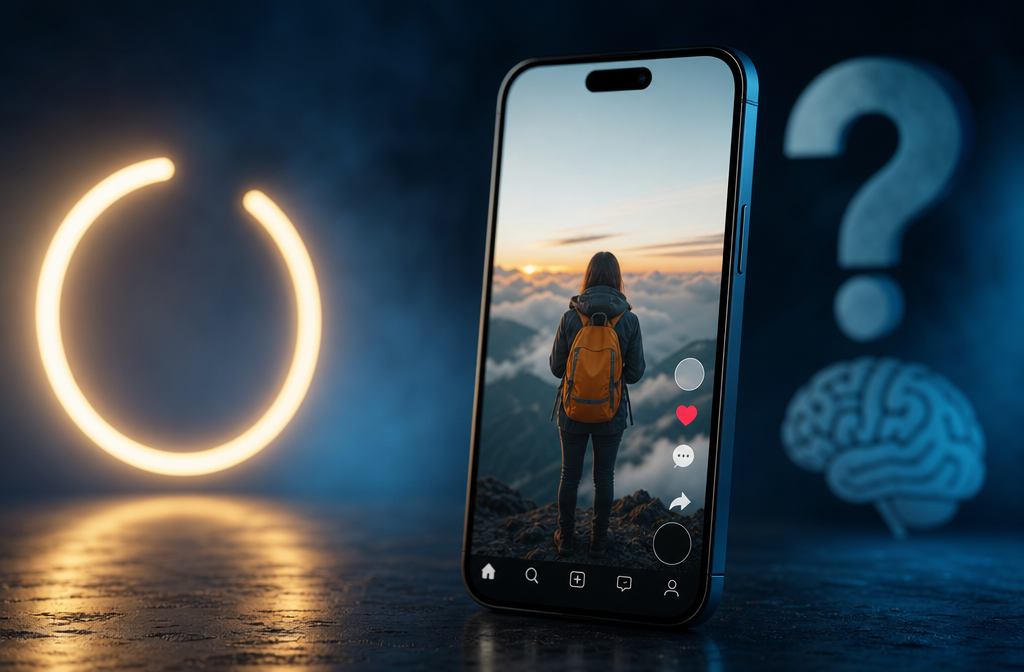
Quick Answer: The most effective short-form video hooks tap into core psychological triggers — curiosity gaps, loss aversion, pattern interrupts, and social proof — to stop viewers from scrolling within the first one to two seconds. These 9 short-form video hooks and psychological tricks for creators work across TikTok, YouTube Shorts, and Instagram Reels, regardless of niche or experience level. Use them deliberately, not randomly, and your retention rates will reflect the difference.
Key Takeaways
- You have roughly one to one and a half seconds to stop a scroll before a viewer moves on permanently.
- Open-loop hooks (starting a story without finishing it) remain the single most powerful psychological trigger in 2026.
- Loss aversion hooks — framing content around mistakes or what viewers might be losing — consistently outperform purely positive hooks.
- Pattern interrupt hooks use unexpected visuals or sounds to physically jolt the brain into paying attention.
- The “stop, then stack” structure (interrupt first, then layer in a curiosity gap) is the dominant hook framework right now.
- Hook length matters: aim for three to five seconds maximum for the verbal or text portion of your hook.
- Different audiences respond differently — younger viewers respond faster to visual chaos; older audiences respond to clear, direct value statements.
- Overused hooks (shock cuts, fake countdowns, cliffhanger screams) are losing effectiveness because audiences have been conditioned to ignore them.
- Psychological hooks can backfire if they feel deceptive — always deliver on the promise your hook makes.
- Industries with the strongest hook results include finance, fitness, food, and personal development.
What Are the Most Effective Psychological Triggers for Short Video Hooks
The most effective psychological triggers for short-form video hooks are curiosity gaps, loss aversion, social proof, and pattern interrupts. These four triggers work because they tap into how the brain processes novelty, threat, and social belonging — all within a fraction of a second.
Here is how each one functions in practice:
- Curiosity gap: You reveal just enough information to create a question in the viewer’s mind, but not enough to answer it. “I tried posting every day for 30 days. Here’s what nobody tells you.” The brain hates unresolved questions, so it stays.
- Loss aversion: People feel the pain of losing something roughly twice as strongly as the pleasure of gaining something. Hooks framed around mistakes, risks, or things viewers might be missing (“You’re probably doing this wrong”) trigger an instinctive need to check.
- Pattern interrupt: A sudden change in visual pace, sound, or framing forces the brain to reset its attention. A hard cut, an unexpected sound effect, or someone speaking directly to camera mid-action all qualify.
- Social proof: Phrases like “10,000 creators already switched to this” or “Everyone in my niche is talking about this” activate the brain’s herd instinct. If others find it valuable, the viewer assumes they should too.
Common mistake: Creators often stack multiple triggers on top of each other without a clear payoff. One strong trigger, delivered cleanly, beats three weak ones fighting for attention.
How to Create Viral Video Hooks That Actually Grab Attention

A hook that grabs attention does one specific thing in the first one to two seconds: it creates an unresolved tension the viewer needs to resolve. The “stop, then stack” structure is the most reliable way to build this in 2026.
The stop, then stack method:
- Stop the scroll with a visual or auditory pattern interrupt — a close-up face, an unexpected prop, a sudden silence, or a bold statement delivered straight to camera.
- Stack the curiosity immediately after with a verbal or text hook that opens a loop. “I made $0 doing this for six months. Then I changed one thing.”
- Tease the payoff without giving it away. “I’ll show you exactly what that was in 60 seconds.”
For a deeper look at how titles and thumbnails work alongside hooks, the high-CTR YouTube titles and thumbnails formula breaks down the visual side of first impressions.
Quick example: A fitness creator opens with a close-up of their face looking genuinely shocked (pattern interrupt), then says “I gained 5kg eating more food, not less” (curiosity gap + counterintuitive claim). That’s two triggers in under two seconds.
Which Psychological Tricks Work Best on TikTok and Instagram Reels
On TikTok and Instagram Reels, visual pattern interrupts and curiosity-gap hooks perform strongest because both platforms use autoplay in a fast-scroll environment. The viewer hasn’t chosen to watch — they’ve stumbled into it. Your hook has to earn the view in real time.
The top-performing hook types on short-form platforms in 2026:
| Hook Type | Best Platform Fit | Why It Works |
|---|---|---|
| Pattern interrupt (visual) | TikTok, Reels | Stops autoplay scroll instantly |
| Open loop / curiosity gap | All short-form | Brain resists unresolved questions |
| Loss aversion / mistake frame | YouTube Shorts, Reels | High emotional urgency |
| Direct value statement | YouTube Shorts | Intent-driven audience expects clarity |
| Counterintuitive claim | TikTok, Reels | Triggers disbelief, demands proof |
| Social proof + FOMO | All short-form | Herd instinct activates quickly |
YouTube Shorts audiences tend to skew slightly more intent-driven, so direct value hooks (“Here’s how to fix your retention in 60 seconds”) perform well there alongside curiosity gaps.
Are These Hook Techniques Different for Different Target Audiences and Age Groups
Yes, hook effectiveness varies meaningfully by audience age and content context. Younger viewers (roughly 16 to 24) respond faster to high-energy visual chaos, rapid cuts, and humor-based pattern interrupts. Older viewers (35 and above) respond better to clear, direct value statements and authority-based social proof.
Audience-specific guidance:
- Gen Z viewers: Lead with the visual hook first, verbal second. Pace matters more than precision.
- Millennial viewers: Curiosity gaps and relatable “mistake” frames work well. They respond to self-improvement framing.
- 35+ audiences: Direct value statements win. “In the next 60 seconds, you’ll learn how to cut your editing time in half” outperforms cryptic open loops.
- Niche communities (gaming, finance, fitness): Social proof and counterintuitive claims land hardest because these audiences are already knowledgeable and are looking for something that challenges their assumptions.
The same psychological triggers apply across age groups — the delivery and pacing shift, not the underlying mechanism.
Which Psychological Triggers Work for Beginners vs Experienced Creators
Beginners should start with open-loop hooks and direct value statements because they are the easiest to script and the most forgiving to deliver on camera. Experienced creators can layer in pattern interrupts and counterintuitive claims, which require more production confidence and editing precision to land correctly.
For beginners: Start your video mid-sentence or mid-action. “So I just found out that most creators are making this exact mistake with their hooks…” is more effective than a formal introduction. If you’re still building your content foundation, the step-by-step guide to making vlog videos covers the basics that make hooks land better.
For experienced creators: Test pattern interrupt hooks that are specific to your brand. Your returning audience already knows your face and voice, so the interrupt needs to be more unexpected — a location change, a tonal shift, or a bold claim that contradicts something you’ve said before.
What Mistakes Do Creators Make When Trying Psychological Video Hooks
The most common mistake is using a hook that promises something the video doesn’t deliver. This is the fastest way to tank your audience retention and train the algorithm to stop recommending your content. Viewers who feel tricked don’t just leave — they leave with a negative association.
Other frequent mistakes:
- Starting with context instead of tension. “Hey guys, today I’m going to talk about…” is not a hook. It’s a preamble. Cut it.
- Burying the hook. If your strongest moment is at the 10-second mark, move it to the first two seconds.
- Using the same hook structure every video. Your regular viewers adapt quickly. Rotate between hook types.
- Ignoring the visual hook. The words matter, but what the camera sees in that first frame matters just as much.
For creators struggling with discoverability beyond the hook itself, check out why your YouTube videos get no impressions — because a great hook can’t fix a distribution problem.
What Are the Top 3 Most Overused Psychological Hook Techniques
The three most overused hook techniques in 2026 are the fake countdown (“You only have 24 hours to see this”), the scream-cut open (a loud noise or yell as the first sound), and the vague cliffhanger (“What happened next changed everything”). Audiences have been conditioned to recognize these patterns and scroll past them.
These hooks aren’t broken — they’re just saturated. If you use them, you need a genuinely unexpected payoff to justify the familiar setup.
Can These Hooks Backfire and Make Viewers Feel Manipulated
Yes, and this is a real risk worth taking seriously. A hook that overpromises and underdelivers doesn’t just lose a viewer — it actively damages trust. Viewers who feel manipulated leave negative signals (skipping, not finishing, not returning) that the algorithm reads as poor content quality.
The ethical boundary is simple: your hook must be an honest preview of what the video delivers. Psychological triggers are tools for capturing attention, not for deceiving people into watching something they wouldn’t choose.
If your hook says “I lost everything,” the video should address that genuinely. Sensationalizing a minor setback as a catastrophe is the kind of manipulation that erodes a channel’s long-term credibility.
Which Industries See the Best Results From Psychological Video Hooks
Finance, fitness, food, and personal development consistently see the strongest hook performance because these niches carry high personal stakes. Viewers in these categories are already motivated — a well-placed loss aversion or curiosity-gap hook accelerates a decision they were already leaning toward.
Creators in lower-stakes niches (craft, travel, lifestyle) see strong results from pattern interrupt and social proof hooks, which work on novelty and belonging rather than urgency.
How Long Should a Perfect Hook Be to Maximize Viewer Retention
The verbal or on-screen text portion of your hook should be three to five seconds long. The visual hook (the first frame the viewer sees) has to do its job in under two seconds. These are not the same thing — both need to work independently and together.
A hook that runs longer than five seconds before delivering any payoff signal loses a significant portion of viewers who were on the fence. Keep it tight. The audience retention tag on Vlogs Lab has more on how retention curves connect to hook structure.
How Much Do Professional Creators Charge for Hook Strategy Consulting
Hook strategy consulting from experienced creators or video marketing specialists typically ranges from $150 to $500 per hour in 2026, depending on the consultant’s track record and niche expertise. Some offer hook audits as a standalone service for $100 to $300 per video batch.
Most beginner and intermediate creators don’t need paid consulting. Learning the nine core hook types, testing two or three per month, and reviewing your own retention analytics in YouTube Studio will teach you more than a single consulting session.
The 9 Short-Form Video Hooks: Psychological Tricks for Creators — Full Reference List

Here are all nine hook types, each built on a distinct psychological trigger:
- Open loop — Start a story, don’t finish it. “I almost quit. Here’s what stopped me.”
- Loss aversion / mistake frame — “You’re probably making this editing mistake right now.”
- Pattern interrupt — A sudden visual or audio break that resets attention.
- Counterintuitive claim — “Posting less actually grew my channel faster.”
- Direct value statement — “In 60 seconds, you’ll know exactly how to fix your hook.”
- Social proof — “Every top creator in this niche uses this one technique.”
- Rhetorical question — “What if your hook is the reason nobody’s watching?”
- Relatable pain point — “You spend hours on a video and it gets 12 views. Here’s why.”
- Bold prediction or controversy — “Short-form video hooks are about to change completely. Here’s what’s coming.”
For creators building out a full content system around these hooks, video retention tips and YouTube Shorts strategy are worth bookmarking.
FAQ
What is a short-form video hook?
A hook is the first one to five seconds of a video designed to stop a viewer from scrolling and commit to watching. It works by creating an unresolved tension — a question, a threat, or a surprise — that the brain wants to resolve.
How many hook types should I use per video?
One primary hook type per video is enough. Stacking too many triggers creates noise, not urgency. Use a secondary trigger only if it reinforces the first.
Do hooks work differently on YouTube Shorts vs TikTok?
Slightly. TikTok and Reels audiences are in a faster scroll environment, so visual pattern interrupts land harder. YouTube Shorts viewers are often more intent-driven, so direct value statements perform strongly alongside curiosity gaps.
How do I know if my hook is working?
Check your average view duration and the audience retention graph in YouTube Studio. If you see a steep drop in the first three seconds, your hook isn’t holding. A flat or slow decline after the first five seconds means the hook worked.
Can beginners use psychological hooks without sounding fake?
Yes. The most beginner-friendly hooks — open loops and direct value statements — require no acting skill. Script them, practice them once, then film. Authenticity comes from delivering on the hook’s promise, not from performance.
What’s the biggest hook mistake new creators make?
Starting with an introduction instead of a hook. “Hey guys, welcome back to my channel” is the fastest way to lose a viewer in the first two seconds. Start mid-thought, mid-action, or mid-sentence.
Do hooks matter for faceless videos?
Absolutely. For faceless content, the visual hook (the first frame) and the audio hook (the first words or sound) carry even more weight because there’s no face to create an instant human connection. See faceless video ideas for hook-specific examples.
How often should I test new hook types?
Test one new hook type every two to four videos. Give each type enough data (at least three to five videos) before drawing conclusions about what works for your specific audience.
Is it ethical to use psychological triggers in content?
Yes, as long as the hook accurately represents the video’s content. Psychological triggers are attention tools, not deception tools. The line is crossed when a hook promises something the video doesn’t deliver.
What’s the “stop, then stack” method?
It’s a two-step hook structure: first interrupt the viewer’s scroll with a visual or audio pattern interrupt, then immediately layer in a curiosity gap or value statement to give them a reason to stay. It’s the most reliable hook framework for short-form video in 2026.
Conclusion
The 9 short-form video hooks and psychological tricks for creators covered here aren’t magic — they’re tools. Each one works because it connects to something the human brain already does automatically: seek answers, avoid loss, follow the crowd, and pay attention to the unexpected.
Your next step is simple. Pick one hook type from the list above. Write three different versions of it for your next video. Film them back to back if you can. Then check your retention graph after 48 hours and see which one held viewers longest.
That’s how you build a hook instinct over time — not by reading about it, but by testing it. For more on building a channel that actually grows, why most YouTube channels never get views is a practical next read.


