

Quick Answer: Short-form video scripts are pre-built structural frameworks that tell you exactly what to say, when to hook the viewer, and how to close with action — all within 15 to 90 seconds. The 13 short-form video scripts: copy and paste viral outlines covered in this guide give YouTube Shorts, TikTok, and Instagram Reels creators a repeatable system for producing content that holds attention and drives shares, without starting from a blank page every time.
Key Takeaways
- Short-form video scripts work by front-loading a hook in the first two seconds, then delivering value fast and ending with a clear call to action.
- The 13 short-form video scripts: copy and paste viral outlines in this guide cover niches from business and education to comedy and lifestyle.
- No script “guarantees” virality, but structured outlines consistently outperform unscripted rambling for watch time and shares.
- Beginners can adapt these templates within one to two filming sessions; the learning curve is low.
- You do not need expensive gear to use these scripts effectively — a smartphone and decent audio are enough to start.
- The biggest mistake creators make is skipping the hook or burying the payoff too deep in the video.
- These scripts differ from traditional long-form scripting by prioritising pattern interrupts, pacing, and retention over narrative depth.
What Are the Best Viral Video Script Templates
The best viral video script templates share three non-negotiable elements: a disruptive hook, a fast value delivery, and a specific call to action. Templates that follow this structure consistently outperform ad-libbed content on platforms that measure completion rate and shares.
Here are the 13 short-form video scripts: copy and paste viral outlines you can start using today. Each one is a skeleton — you fill in your niche-specific content.
| # | Script Name | Best For | Core Structure |
|---|---|---|---|
| 1 | The Bold Claim | Education, business | Claim – Proof – CTA |
| 2 | The Before/After | Fitness, finance, DIY | Problem – Transformation – Result |
| 3 | The List Reveal | Any niche | Tease number – Rapid list – Recap |
| 4 | The Story Hook | Lifestyle, personal brand | Micro-story – Lesson – CTA |
| 5 | The Myth Buster | Education, health | False belief – Truth – Evidence |
| 6 | The Tutorial Sprint | Tech, cooking, crafts | Step 1, 2, 3 – Quick demo – CTA |
| 7 | The Reaction | Comedy, commentary | Clip/situation – Reaction – Punchline |
| 8 | The Question Trap | Any niche | Open question – Partial answer – Watch to end |
| 9 | The Day-in-Life Snapshot | Lifestyle, travel | Scene setting – Key moment – Takeaway |
| 10 | The Comparison | Finance, tech, food | Option A vs B – Verdict – CTA |
| 11 | The Trend Hijack | Comedy, pop culture | Trending audio/format – Your spin – CTA |
| 12 | The Challenge | Fitness, gaming, food | Rules – Attempt – Result |
| 13 | The Community Call | Any niche | Shared pain point – Your take – Ask for replies |

How Do These Short-Form Video Scripts Actually Work
Each script works by exploiting how short-form platforms measure performance. Completion rate, shares, and comments are the signals that push content to new audiences. These outlines are engineered to keep viewers watching past the first three seconds — which is where most videos lose people.
The mechanics are straightforward:
- Hook (0–2 seconds): Say or show something that creates a gap in the viewer’s mind. They need to know what comes next.
- Value delivery (3–45 seconds): Fulfil the promise of the hook. Be specific. Cut anything that doesn’t serve the point.
- Call to action (final 3–5 seconds): Tell viewers exactly what to do — follow, comment, share, or watch another video.
Every one of the 13 outlines follows this spine. The format changes; the logic doesn’t.
Which Script Formats Perform Best on TikTok and Instagram Reels
The List Reveal, the Bold Claim, and the Tutorial Sprint consistently perform well on TikTok and Instagram Reels because they signal value immediately and reward viewers for staying. Platforms reward videos with high completion rates, and these three formats make it easy for viewers to justify watching to the end.
For TikTok specifically, the Trend Hijack and Reaction scripts benefit from native audio trends — pairing your content with a trending sound can push it into the algorithm’s discovery layer. On Reels, the Before/After and Comparison formats tend to drive saves, which is a strong engagement signal on Instagram.
If you’re building a YouTube Shorts strategy, the Tutorial Sprint and the Community Call work well because they complement longer content on your main channel. For more on that, check out the YouTube Shorts strategy tag on Vlogs Lab.
Are These Scripts Guaranteed to Go Viral
No script guarantees virality. Anyone telling you otherwise is selling something. What these outlines do is remove the structural mistakes that kill most short-form videos before they get a chance.
Virality depends on factors outside your control: timing, platform mood, trending topics, and a degree of luck. What you can control is structure, hook strength, and delivery. These 13 outlines put you in the best position to perform well consistently, which over time increases your chances of a breakout video.
Think of it this way: a well-structured video that earns 5,000 views every time beats an unscripted gamble that occasionally hits 50,000 but usually gets 200.
What Makes a Short-Form Video Script Actually Go Viral
Viral short-form videos almost always share four characteristics: a hook that creates curiosity or surprise, a fast pace that respects the viewer’s time, an emotional response (laughter, awe, recognition, or relief), and a share trigger — something so useful or entertaining that the viewer wants to send it to someone.
The scripts in this guide are built around those four drivers. The Myth Buster script, for example, triggers the “I didn’t know that” response. The Challenge script creates suspense. The Community Call script makes viewers feel seen.
One practical rule: if your hook doesn’t make someone stop scrolling, nothing else matters. Write three to five hook variations for every video and pick the sharpest one. For more on what drives clicks before the video even plays, read about high-CTR YouTube titles and thumbnails.
How These Scripts Differ from Traditional Video Scripting Techniques
Traditional video scripting — the kind used for documentaries, corporate videos, or long-form YouTube content — builds slowly. It establishes context, develops a narrative arc, and earns the payoff over several minutes. Short-form scripts do the opposite.
Short-form scripts front-load everything. The payoff is either in the first two seconds or strongly implied by them. There’s no room for a slow intro, a lengthy “welcome back to my channel,” or a two-minute backstory. Every second has to justify itself.
The other key difference is pattern interrupts. Short-form scripts deliberately break the viewer’s visual or auditory expectation every five to eight seconds — a cut, a zoom, a sound effect, a text overlay — to prevent scroll fatigue. Traditional scripting rarely accounts for this.
If you’re new to structuring any kind of video content, the guide on how to make vlog videos is a solid starting point before you layer in these short-form techniques.
Do These Scripts Work for Different Niches
Yes. The 13 short-form video scripts: copy and paste viral outlines in this guide are niche-agnostic frameworks. The structure works; you supply the subject matter.
- Business and finance: The Bold Claim, Comparison, and Myth Buster work well for building authority.
- Comedy: The Reaction, Trend Hijack, and Challenge formats are built for entertainment-first content.
- Education: The Tutorial Sprint, List Reveal, and Myth Buster are natural fits.
- Lifestyle and travel: The Day-in-Life Snapshot and Story Hook create connection.
- Fitness and health: Before/After and Challenge scripts show tangible results.
The only adjustment you need to make is the hook language. A finance hook (“Most people lose money doing this”) sounds different from a comedy hook (“Nobody told me this would happen”), but both use the same curiosity gap mechanism.
For faceless content creators, scripts like the Tutorial Sprint and List Reveal work especially well. See 50 faceless YouTube video ideas for inspiration on pairing these scripts with anonymous formats.
What Are Common Mistakes People Make with Short-Form Video Scripts
The most common mistake is treating the script as a rigid word-for-word transcript. Short-form scripts should feel natural, not read. Use the outline as a map, not a teleprompter.
Other frequent errors:
- Weak hook: Starting with “Hey guys, today I’m going to talk about…” kills momentum immediately.
- Burying the value: Saving the best insight for the last 10 seconds means most viewers never see it.
- No call to action: Ending without telling viewers what to do next wastes the engagement you just earned.
- Ignoring pacing: Reading the script at a flat pace drains energy from the delivery. Vary your speed.
- Over-scripting: Trying to fit too many points into 60 seconds makes the video feel rushed and hard to follow.
These are also the patterns that hurt video rankings. If you’re seeing low impressions alongside low engagement, check out why your YouTube videos get no impressions for a broader diagnostic.
Are These Scripts Suitable for Beginners or Just Experienced Creators
These scripts are genuinely beginner-friendly. The whole point of a copy-and-paste outline is that it removes the blank-page problem. You don’t need to understand narrative theory or have years of on-camera experience to follow a structure.
That said, beginners should start with the simplest formats: the Tutorial Sprint, the List Reveal, or the Bold Claim. These have the clearest structure and the least room for confusion. More complex formats like the Trend Hijack require some platform familiarity to execute well.
Most creators can adapt their first script within one or two filming sessions. The first take will feel awkward. That’s normal. By the third or fourth video using the same framework, delivery becomes natural.
How Quickly Can You Learn to Adapt These Viral Script Templates
Most creators can produce their first usable short-form video using one of these templates within a day of reading the outline. Adapting the template to your specific niche and voice takes two to four weeks of consistent posting.
The fastest way to accelerate that learning curve:
- Pick one script format and use it for five consecutive videos.
- Review your analytics after each video — watch time drop-off tells you where the script lost people.
- Adjust the hook or pacing based on what the data shows.
- Only then try a second script format.
Consistency matters more than variety when you’re learning. For more on building that consistency, the content consistency tag on Vlogs Lab has practical guidance.
What Equipment Do You Need to Create Viral Short-Form Videos
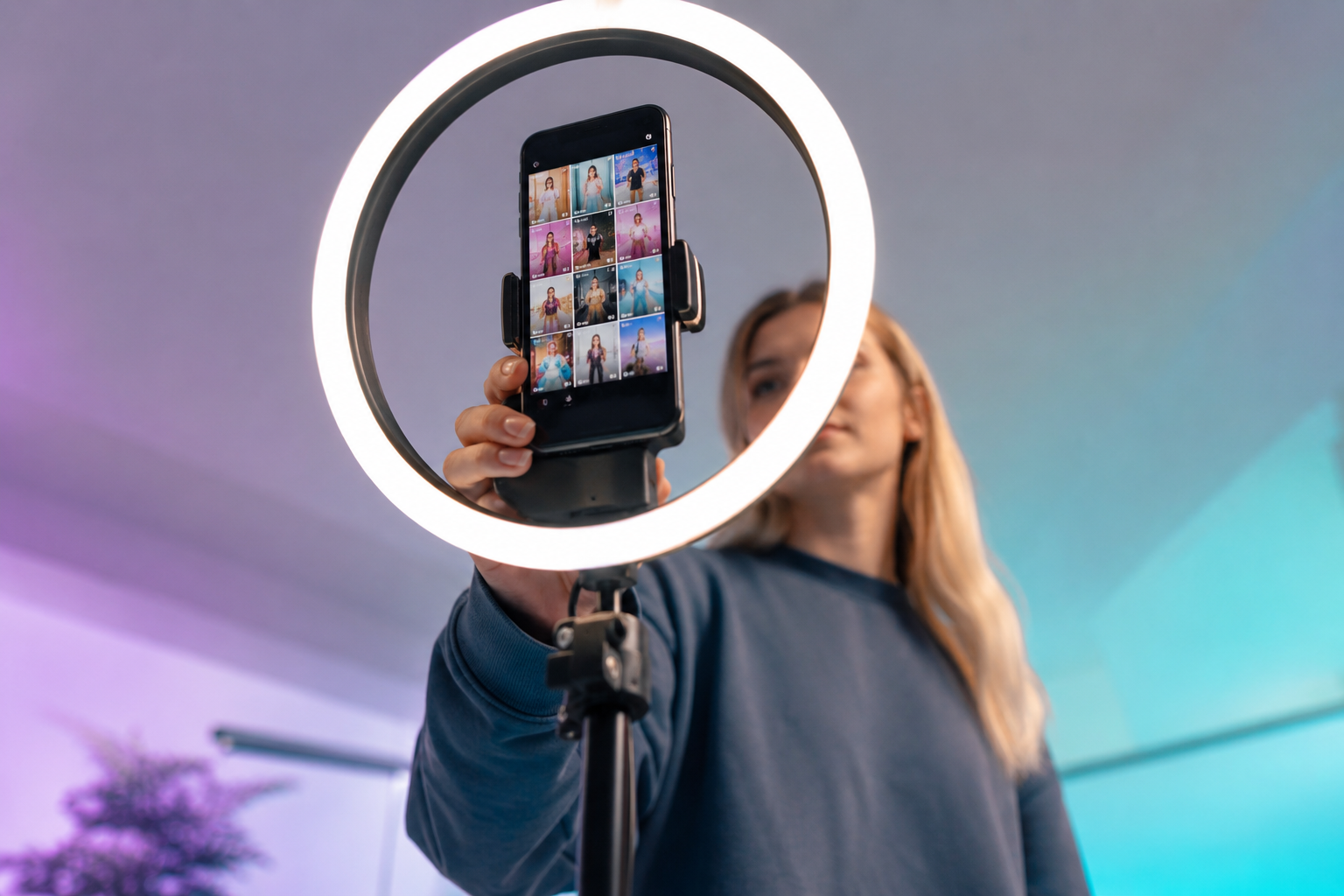
You need less than you think. A smartphone with a decent camera, good natural light or a basic ring light, and a clip-on or wireless microphone covers 90% of what makes a short-form video watchable.
Essential gear checklist:
- Camera: Any smartphone from the last three years. Dedicated cameras are optional.
- Audio: Clear audio matters more than video quality. A budget wireless mic makes a significant difference.
- Lighting: Natural window light works. If you’re filming indoors consistently, a basic ring light or LED panel removes the biggest visual barrier.
- Editing software: Free tools like CapCut (for mobile) or DaVinci Resolve (for desktop) handle everything short-form videos need. For a broader look at options, see the best free vlogging software guide.
If you want to invest in a dedicated camera later, the best vlogging cameras under $200 is a practical starting point.

How Much Do Professional Video Script Templates Cost
Pre-built short-form script templates range from free (community forums, creator blogs, this guide) to $10–$50 for niche-specific packs on platforms like Gumroad or Etsy. Professional scriptwriting services for custom short-form content typically charge $50–$200 per script, depending on the writer’s experience and the complexity of the brief.
For most creators, free or low-cost templates are the right starting point. The frameworks in this guide are free to use and adapt. Paying for custom scripts only makes sense once you’re producing content at scale and your time cost exceeds the writing cost.
Conclusion
Structured short-form scripts aren’t a shortcut — they’re a smarter starting point. The 13 short-form video scripts: copy and paste viral outlines in this guide give you a proven framework for every content type, niche, and platform. You don’t need to reinvent the wheel for every video. You need a reliable structure, a sharp hook, and consistent delivery.
Your next step: Pick one script from the table above — the one that fits your niche best. Write a hook, fill in the body, and film it today. Don’t wait for perfect conditions or perfect gear. The fastest way to get good at short-form video is to make the video.
Once you’ve posted your first scripted short, review the watch-time graph in your analytics. That graph will tell you exactly where to improve next. And if your channel isn’t getting the traction you expect, fixing YouTube channel growth issues is a logical next read.
Frequently Asked Questions
What is a short-form video script?
A short-form video script is a structured outline that tells a creator what to say and when during a video under 90 seconds. It typically includes a hook, a value section, and a call to action.
How long should a short-form video script be?
The written script for a 60-second video is usually 100–150 words when spoken at a natural pace. Shorter videos (15–30 seconds) need 40–75 words.
Can I use the same script multiple times?
Yes, with different content. The structure repeats; the subject matter changes. Many successful creators use the same two or three frameworks across hundreds of videos.
Do I need to memorise the script?
No. Use the outline as a guide, not a word-for-word script. Natural delivery almost always outperforms memorised recitation on camera.
Which platform responds best to scripted short-form content?
All three major platforms — TikTok, Instagram Reels, and YouTube Shorts — reward structured content. TikTok tends to reward trend-aware scripts; YouTube Shorts rewards educational and tutorial formats.
How do I know if my hook is strong enough?
Test it. If your average view duration drops below 50% of the video’s total length, your hook isn’t holding. Write three hook variations and A/B test them across separate posts.
Can these scripts work without showing my face?
Absolutely. The Tutorial Sprint, List Reveal, and Bold Claim scripts all work well as voiceover-driven or text-overlay formats. See video ideas without showing your face for more options.
What’s the most beginner-friendly script format?
The Tutorial Sprint. It has a clear three-step structure, a natural pace, and works in almost every niche. Most beginners can film a usable version on their first attempt.
Should I write a new script for every video?
Not necessarily. Once you’ve mastered a framework, you can outline a video in 10–15 minutes. The goal is to internalise the structure so it becomes instinct.
Do viral short-form scripts require trending audio?
No, but trending audio can amplify reach on TikTok and Reels. The script structure works independently of audio choice.
Sources
- TikTok for Business Creative Center. (2023). What’s Next Report: TikTok Trends. https://www.tiktok.com/business/en/blog
- Wistia. (2023). State of Video Report. https://wistia.com/state-of-video
- HubSpot. (2024). The State of Marketing Report. https://www.hubspot.com/state-of-marketing
Answer two quick questions and get the best script outline from the 13 short-form video scripts for your next video.


